
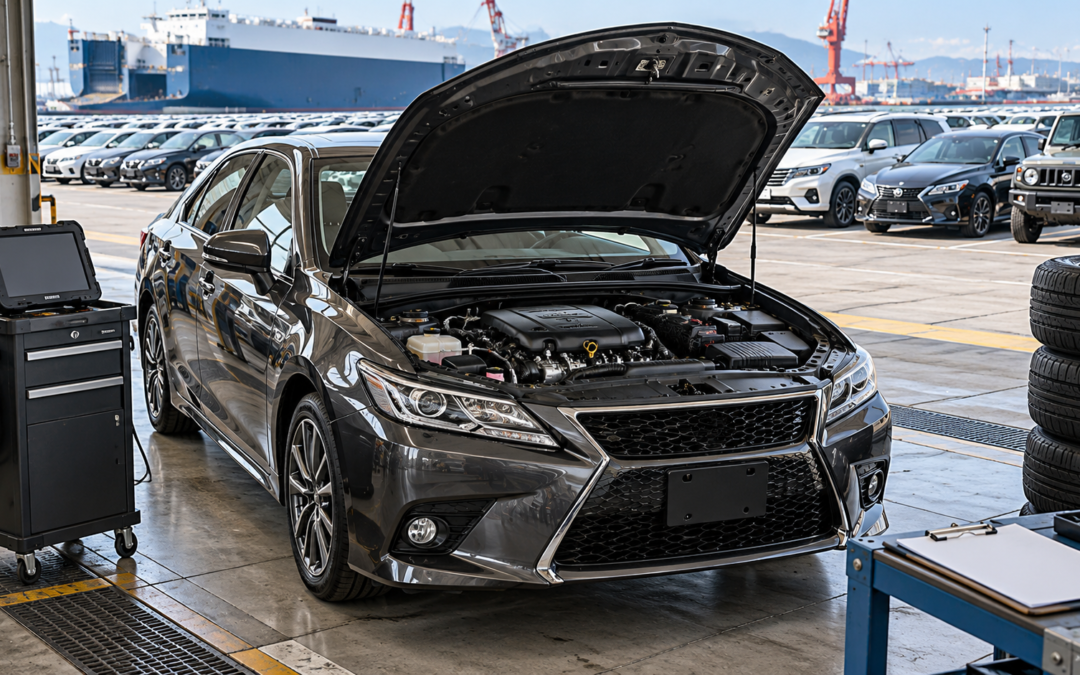
How to Inspect a Used Car from Japan Before Importing
Buying a used car from Japan can give international buyers access to a wide range of vehicles, models, and specifications. However, choosing the right vehicle requires more than comparing prices and photographs.
Before purchasing, it is important to understand the vehicle’s condition, mileage, inspection information, and maintenance history where available. Learning how to inspect a used car from Japan can help you make a more informed decision and reduce the risk of unexpected expenses.
Understand the Japanese Car Auction Sheet
A Japanese car auction sheet is an important source of information when purchasing a vehicle through an auction. It may contain details about the vehicle’s overall condition, interior, exterior, mileage, and recorded defects.
Auction grading systems vary between auction houses, so buyers should avoid assuming that every grade has the same meaning.
Pay particular attention to inspection remarks, damage diagrams, and notes about repairs, scratches, dents, rust, or interior wear. If you cannot interpret the auction sheet confidently, ask your exporter to explain the grading and any unfamiliar inspection symbols.
Remember that an auction sheet reflects the information recorded during a particular inspection. It does not guarantee that every mechanical or hidden issue has been identified.
Check Mileage and Vehicle History
Mileage can help you understand how extensively a vehicle has been used, but it should not be the only factor in your decision.
Compare the recorded mileage with available inspection documents, service records, and other vehicle information. Look for inconsistencies that may require further clarification.
Where available, review maintenance history, previous repairs, accident information, and ownership records. The availability of these records varies by vehicle.
A car with higher mileage and documented maintenance may be a more suitable purchase than a lower-mileage vehicle with uncertain condition. Evaluate the full picture rather than relying on one number.
Examine the Exterior and Interior Condition
Photographs and inspection reports can help you identify visible signs of wear before purchasing a vehicle remotely.
For the exterior, check for scratches, dents, paint differences, rust, damaged panels, and signs of previous repairs. Pay attention to the underside where inspection information is available, especially if corrosion is a concern in your destination market.
For the interior, review the condition of the seats, dashboard, carpets, controls, and other visible components. Excessive wear may warrant questions about the vehicle’s use and maintenance.
Request additional photographs or clarification when important areas are not clearly shown. If the vehicle’s condition cannot be established confidently, consider whether further inspection is possible before committing.
Assess the Engine, Transmission, and Mechanical Condition
A vehicle may look attractive in photographs while still having mechanical problems. Auction sheets and visual inspections can reveal some warning signs, but they cannot replace a comprehensive mechanical assessment.
Where inspection services are available, consider checks of the engine, transmission, cooling system, suspension, brakes, tires, and electrical components.
For hybrid vehicles, battery condition and hybrid-system diagnostics are particularly important. For older or performance-oriented cars, investigate modifications, maintenance requirements, and the availability of replacement parts.
Ask what the available inspection actually covers. Do not assume that an auction grade confirms that every mechanical system has been tested.
Verify the Vehicle’s Specifications and Import Eligibility
Before purchasing, confirm the exact make, model, manufacturing year, engine type, transmission, chassis number, and trim level.
Specifications can differ between model years and variants, even when vehicles share the same model name. Check that the selected configuration meets your needs and is suitable for your destination country.
Import regulations may include vehicle-age restrictions, emissions requirements, steering configuration rules, safety standards, and other eligibility conditions.
Verify the latest requirements with the relevant customs or transport authority before paying for the vehicle. A car that is available for export from Japan may not necessarily qualify for import or registration in your country.
Calculate the Total Import Cost Before Buying
The purchase price is only one part of the overall cost. Before confirming your decision, estimate the full cost of importing the vehicle.
Your budget may need to include:
-
Vehicle purchase price and auction fees
-
Exporter service charges
-
Domestic transportation in Japan
-
Export documentation
-
International RORO or container shipping
-
Insurance, if selected
-
Customs duties and taxes
-
Port handling, inspection, and local delivery charges
The applicable expenses depend on the vehicle, shipping route, and destination country. Request an itemized estimate so you can compare vehicles based on their expected total landed cost.
Get Help Sourcing a Suitable Vehicle with AYA International Japan
AYA International Japan supports international buyers with Japanese vehicle sourcing and export coordination. Depending on your requirements, services may include auction sourcing, ready-stock vehicles, special vehicle sourcing, export documentation, customs coordination, and RORO or container shipping arrangements.
When discussing a vehicle, share your preferred model, budget, destination country, and any specific requirements. Ask for available auction or inspection information, clarification of the vehicle’s condition, and an estimate of the costs involved.
Looking for a used car from Japan? Contact AYA International Japan to discuss suitable vehicle options and the steps involved in sourcing and exporting your preferred car.
Frequently Asked Question
How can I inspect a used car from Japan before importing it?
Review the auction sheet, available photographs, mileage information, vehicle specifications, and maintenance records where available. Consider an additional inspection if possible, particularly when mechanical condition is uncertain.
What does a Japanese car auction sheet tell you?
An auction sheet may provide information about a vehicle’s condition grade, interior and exterior condition, mileage, visible damage, and inspection remarks. Its contents and grading conventions can vary by auction house.
Is a Japanese auction grade a guarantee of vehicle quality?
No. An auction grade is an assessment based on the information recorded during an inspection. It does not guarantee that every mechanical fault, hidden defect, or future maintenance issue has been identified.
How do I check whether a Japanese used car has genuine mileage?
Compare available mileage records, inspection documents, service history, and other vehicle information. If there are inconsistencies, ask for clarification before purchasing. Complete verification may not always be possible when records are limited.
What should I check before importing a used car from Japan?
Check the vehicle’s condition, mileage, specifications, available history, total landed cost, and eligibility under your destination country’s import regulations. Also confirm shipping arrangements and the documents required for customs clearance.